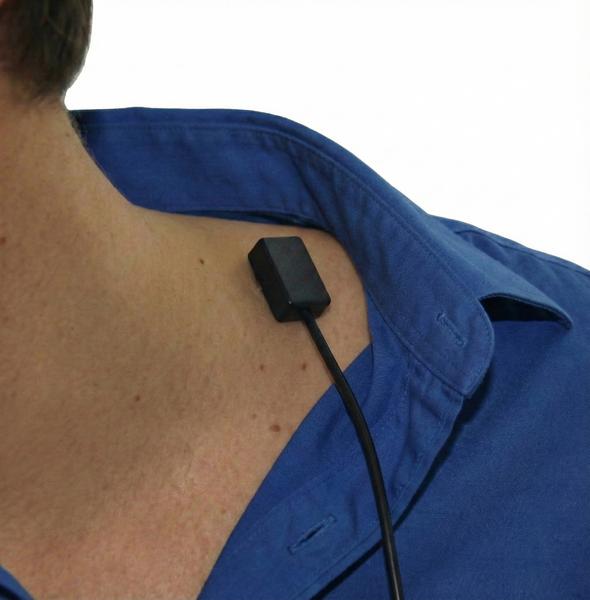
Tactile (TDRT)
A small vibration motor on the shoulder or collarbone. It places no demand on vision, which suits the evaluation of displays and touchscreens.
Products ISO 17488
A stimulus and response system for measuring the attentional effects of cognitive load with the method of ISO 17488:2016, in the laboratory, the simulator or on the road.
While the participant drives and performs the task under study, a stimulus appears every three to five seconds. The participant presses the finger switch as soon as they detect it. ISO 17488 counts a press between 100 and 2500 ms after onset as a hit, and no press in that window as a miss. A stimulus answered in under 100 ms is excluded as premature.
Response time and hit rate are the two measures. As cognitive load rises, responses slow and more stimuli go undetected.
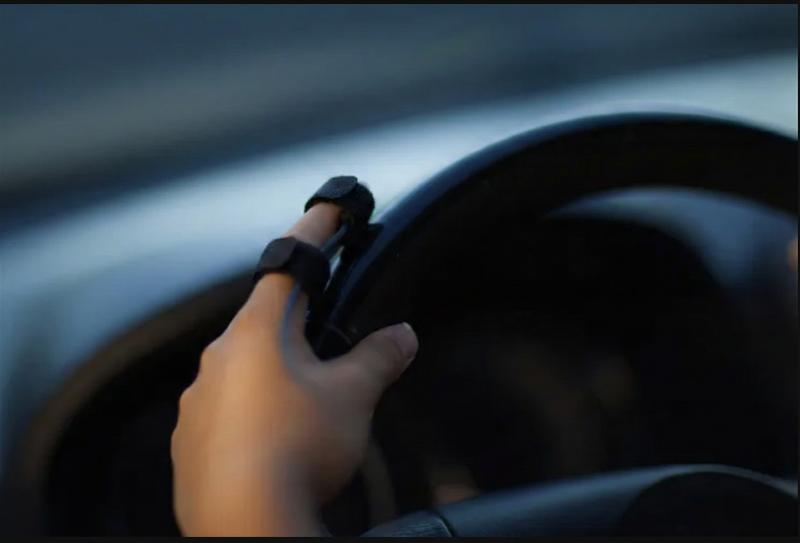
ISO 17488 describes three stimulus arrangements. The kit includes all of them.
A small vibration motor on the shoulder or collarbone. It places no demand on vision, which suits the evaluation of displays and touchscreens.
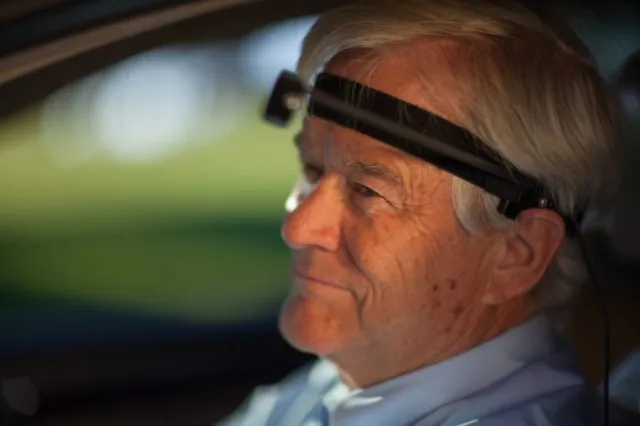
A red LED on a light headband, in the peripheral visual field. It moves with the head, so its visual angle stays constant.
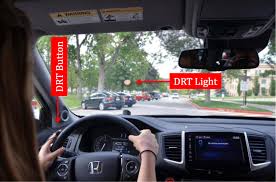
A fixed LED on the dashboard or A-pillar. Earlier literature calls this arrangement the peripheral detection task.
| Stimuli | Vibration motor, head-mounted LED, remote LED |
|---|---|
| Inter-stimulus interval | 3–5 s between stimulus onsets, randomized. Configurable |
| Stimulus duration | 1000 ms or until the response, by default. Configurable |
| Reaction time | Measured on the device, not the host computer. 1 ms resolution |
| Wired unit | Reports each response about 5 ms late because of a fixed switch debounce. The offset is constant, so it cancels in comparisons between conditions |
| Wireless unit | A hardware interrupt time-stamps the press. No debounce delay |
| Logged per stimulus | Reaction time of the first press, or −1 when there is no press before the next stimulus. You apply the 100–2500 ms hit window of ISO 17488 in analysis |
| Control | USB serial. RSLogger, or start and stop commands from your own software |
| Output | CSV with one row per stimulus: onset time, reaction time and response count |
| Warranty | Two years |
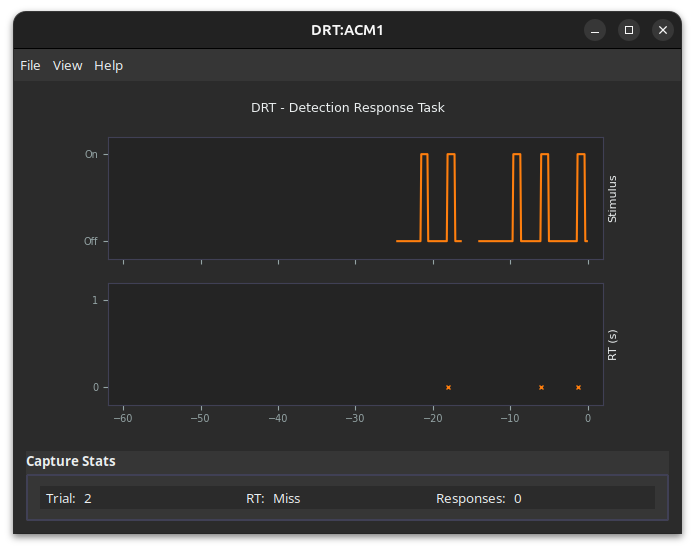
The DRT runs from RSLogger, which is included. Its DRT module sets the stimulus interval, duration and intensity, plots reaction times and misses during the session, and writes one row per stimulus to CSV. RSLogger stamps each row with the same host clock it uses for cameras, the eye tracker and the occlusion goggles recorded in the same session.
Ordering
The complete kit carries a two-year warranty, and we ship worldwide. Tell us about your protocol and we will reply with a formal quote, usually within one business day.